What comfrey is and why people grow it
Sedgefield · Western Cape · Regenerative
Comfrey is one of those plants that experienced gardeners tend to keep talking about for a reason. Once you understand how much leafy growth it can produce, how useful that growth is around the garden, and how little space it needs to earn its place, it starts to make sense why so many people rate it so highly.
Comfrey is not usually grown because it is pretty or delicate. People grow it because it is practical. It can help support mulch systems, compost making, biomass production, and general garden resilience, which is why it shows up so often in food forests, organic gardens, and regenerative growing systems.
Why gardeners grow comfrey
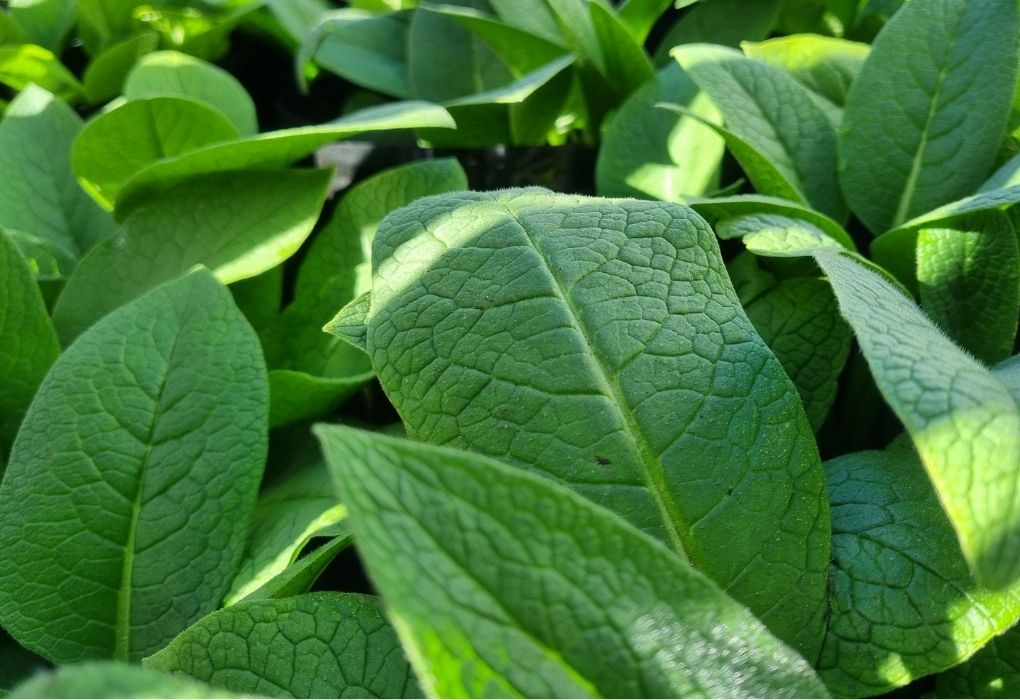
Most gardeners start appreciating comfrey when they realise how much useful leaf matter one plant can produce in a season. A well established plant can be cut back again and again, and those leaves can then be used around beds, fruit trees, compost heaps, or anywhere else you want fast organic material.
Another reason gardeners love comfrey is that it is a hard working perennial. Once it is established in a good spot, it can keep coming back year after year, giving you a repeat source of leafy material without needing to replant every season.
Why regenerative growers use comfrey
-
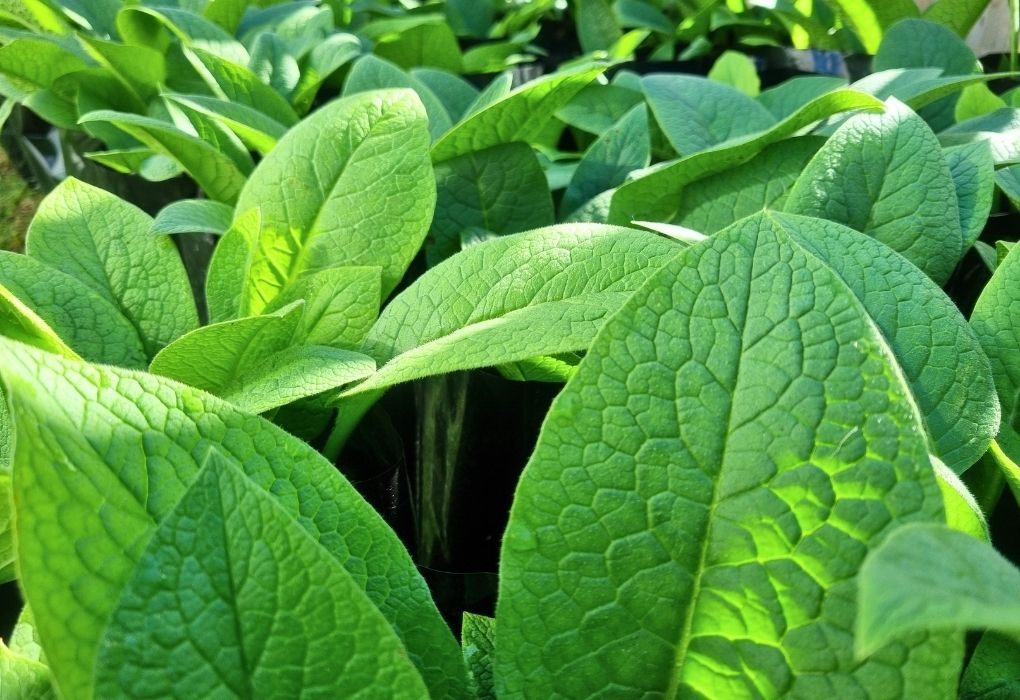
Fast leafy growth for ongoing mulch and biomass production.
-
Useful support plant for compost systems and liquid feed making.
-
Fits well into food forests, mixed gardens, and regenerative planting systems.
-
Often grown from crowns, divisions, or root cuttings rather than seed.
Regenerative growers usually look at plants in terms of function, not just appearance. Comfrey earns its place because it produces a lot of organic matter (biomass), responds well to repeated cutting, and can become part of a broader cycle of feeding soil, supporting compost, and building more resilient growing spaces over time.

What comfrey can be used for
Comfrey is mainly valued as a support plant. People use the leaves for chop-and-drop mulch, compost building, and liquid feed, especially in systems where they want more on site fertility and less dependence on bought in inputs.
It is also popular around fruit trees, vegetable beds, and food forests because of the amount of biomass it can produce. Even a small patch of comfrey can supply a surprising amount of material for mulching and compost support once it is established well.
-
Chop-and-drop mulch around trees and beds.
-
Compost support and green material production.
-
Liquid feed systems for garden use.
-
Long-term biomass in regenerative gardens

Comfrey in a South African garden context
In a South African garden, comfrey can be especially useful for growers who want a plant that keeps producing leafy material for mulch and compost support. Whether you are building a food garden, improving soil, or trying to reduce waste by cycling more fertility on site, comfrey can fit into that picture very well.
It also suits growers who want practical plants rather than ornamental ones. If space is limited, the question is not whether comfrey looks impressive in a formal border. The real question is whether you want a plant that can keep giving you useful material for your garden systems over time. For many growers, the answer is yes.
Bocking 14 vs common comfrey
This is one of the most common questions people ask once they start reading about comfrey. Both common comfrey and Bocking 14 are useful, but growers often talk about them differently depending on how they spread, how they are sourced, and how they fit into different garden systems.
Bocking 14 is widely discussed as a preferred option for growers who want a productive comfrey line that is commonly described as non-seeding and grown from crowns or root divisions. Common comfrey is still very useful, but it is often treated as a separate option and managed with slightly different expectations.
If you want to understand that difference better, read our Bocking 14 Comfrey South Africa page
Buy comfrey or learn more about Bocking 14
If you are ready to start growing comfrey, visit our Buy Comfrey page to see current planting stock options. If you are still deciding which type makes the most sense for your garden, our Bocking 14 page gives a clearer look at that side of the topic.